At a Glance
Gorman Falls
Headline Hike
70-foot spring-fed waterfall — 3-mile round trip over rough, rocky terrain.
35+ Miles
Trail Network
More than a waterfall park — enough trail miles to support a multi-day camp.
$5 Adult
Day-Use Fee
Entrance fee for adults (13+); children 12 and under are free. TPWD Pass holders get in free.
Entrance Road
Biggest Planning Variable
The entrance road can flood during heavy rain — TPWD recommends checking conditions before you drive out.
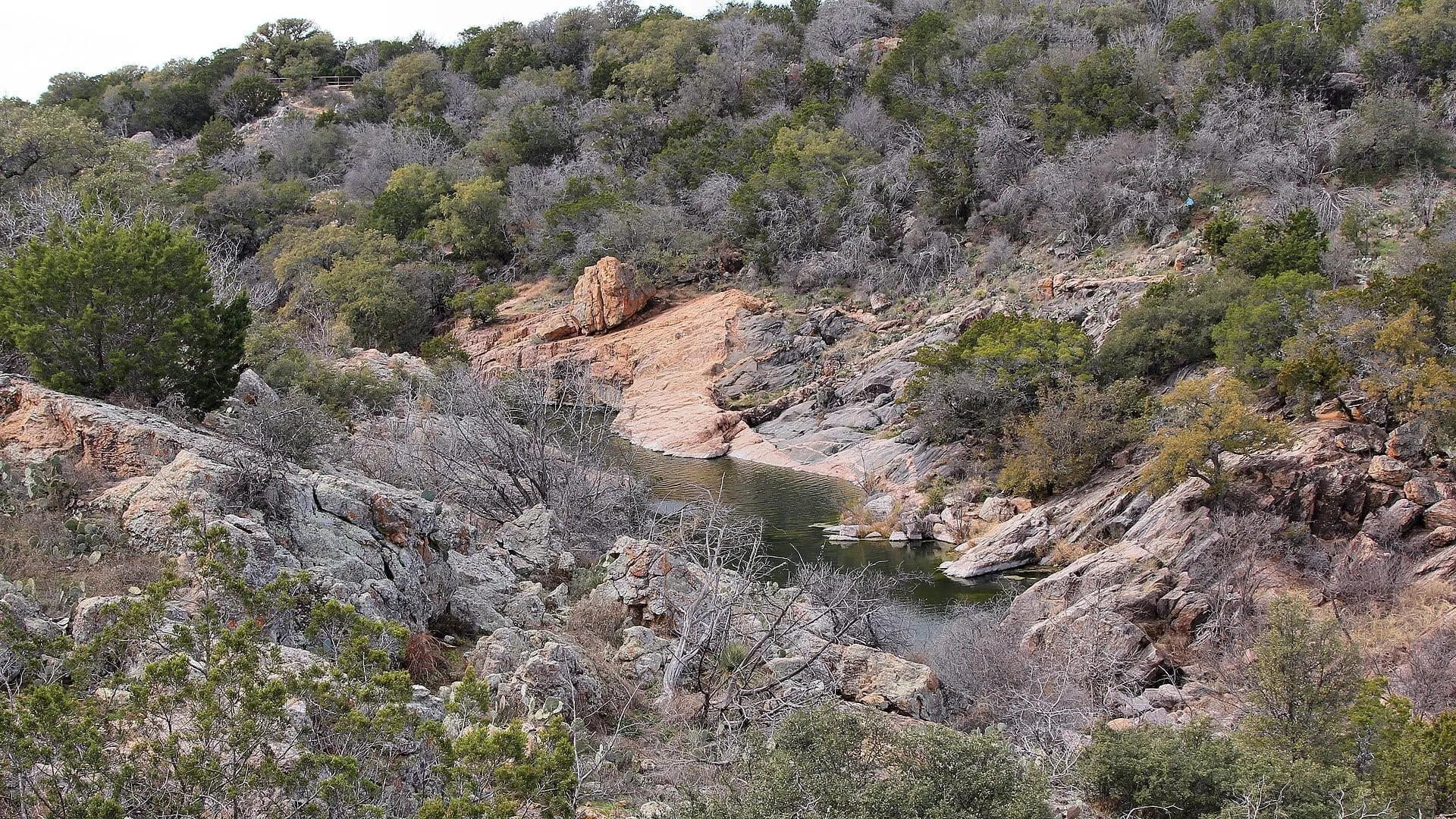
Colorado Bend State Park is two hours northwest of Austin on a road that can flood. There is no camp store. No hookups. The composting toilets are there, which is something, but the park reads unmistakably like wilderness: rough terrain, remote feel, and more than 35 miles of trails through country most visitors don’t reach past the first trailhead.
The payoff is Gorman Falls: a 70-foot spring-fed waterfall draped in ferns and moss at the end of a 3-mile round trip over rocky, uneven ground. It looks like something from New Zealand, not Central Texas. The approach earns the arrival in a way that a paved-path waterfall never does.
Use this guide if you want to plan the trip right. That means knowing what the hike involves, booking the cave tour separately, checking the entrance road before you drive out, and arriving with enough gear to handle a day in low-amenity terrain.
Colorado Bend Reservations and Parking Tips
Colorado Bend requires more logistical prep than most Hill Country parks.
- Reservations: TPWD strongly recommends reserving day use and camping in advance, especially in spring and fall.
- Fees: 2026 adult entry is $5, with children 12 and under free.
- Entrance road: The entrance road can flood during heavy rain, which means weather checks are not optional.
- Parking and arrival: Main parking is centered around the primary trailhead and river-access areas, and it fills earlier than people expect on popular weekends.
- Navigation: Download maps before you leave Marble Falls or Lampasas. Cell signal is unreliable by the time you’re fully in the park.
Why You Should Visit Colorado Bend State Park
TPWD describes it as unspoiled wilderness. That’s accurate and also the planning caveat: Colorado Bend doesn’t meet visitors where they are. The park meets visitors where it is: farther out, rougher underfoot, and without the restaurant stop or souvenir shop thirty minutes down the road.
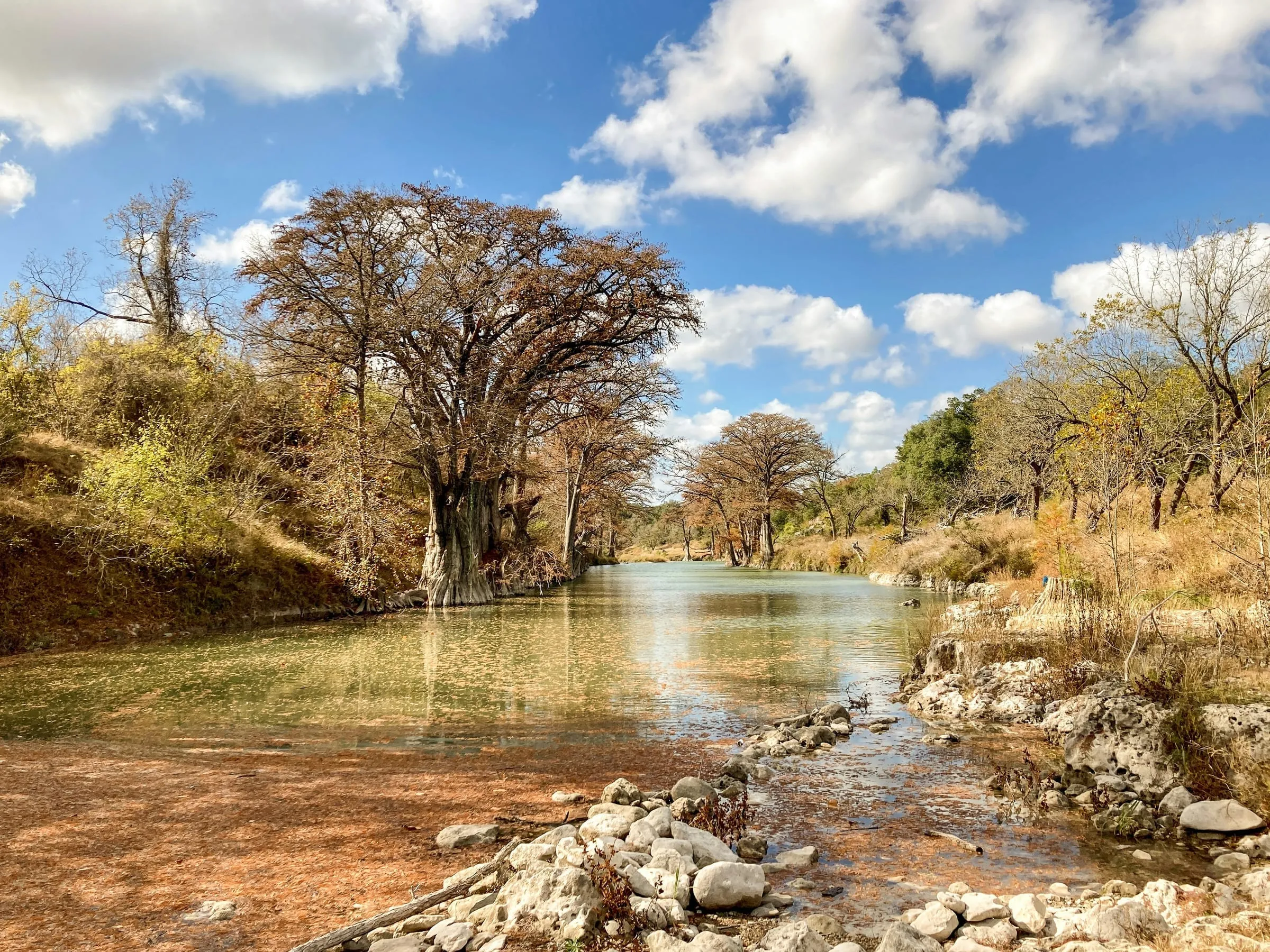
That remoteness is the value, not the price. The park sits on the Colorado River with canyon views, spring-fed creeks, and a cave system that runs underground while you’re hiking above it. The combination of waterfall, springs, caves, and primitive camping is what makes a Colorado Bend visit feel qualitatively different from Inks Lake or Guadalupe River State Park. It takes more from you. It gives more back.
The 35-plus mile trail network is the evidence that this is a full destination and not a single-attraction stop. Most visitors arrive for Gorman Falls and leave having seen it. The ones who stay longer tend to come back.
Hiking to Gorman Falls: Difficulty and Trail Info
The numbers: 3 miles round trip. The Gorman Falls trail is currently open and accessible, though TPWD qualifies it as rough, rocky terrain. The trail involves exposed limestone, uneven footing, and sections where the route narrows along canyon edges. It is not a paved nature path with guardrails. Casual hikers in flip-flops have a bad time. Hikers with trekking poles and trail shoes have a very good one.
The falls themselves run year-round because they’re spring-fed. The mossed-over flow doesn’t depend on recent rainfall the way a rain-runoff waterfall does. That means a dry October visit can be as good as a wet April one. The approach through the canyon keeps the light muted and cool even on warm days.
Grippy footwear matters on this trail. If gear guidance is useful before the trip, the best hiking shoes for the Texas Hill Country guide covers what holds up on exposed limestone terrain. The what to pack for Enchanted Rock guide has practical day-hike prep that transfers directly to Colorado Bend conditions.
Spicewood Springs and the Rest of the Park
Gorman Falls is the headline, but Spicewood Springs is worth knowing about as a second named water feature, a spring-fed creek area TPWD lists among the park’s highlights that’s worth exploring if you have the time. The trail network opens up considerably once you’re past the main Gorman Falls route, and the Colorado River access along the park’s eastern boundary adds a different texture to the day.
The official trails page has the current route breakdown. With 35 miles of trail, there is enough variety here to fill multiple visits. Some routes are short and accessible, others are long enough to earn primitive hike-in camping at the far end.
If you’re still deciding what pack makes sense for this kind of rougher day hike, our daypacks guide for Hill Country hiking is the cleanest gear companion for Colorado Bend.
Cave Tours: A Separate Reservation, a Different Experience
The caves at Colorado Bend are their own thing. Guided tours run through a limestone cave system that sits underground while you’re hiking on the surface above. The same geological forces that created Gorman Falls created the cave system below it. It’s a layered experience and one of the clearest reasons to plan an overnight or a full two-day visit rather than a single day.
Cave access is not part of your park entry fee and is not a walk-up activity. Tours are booked through cbcaves.com, which is the reservation system the park operates through. Book this before your visit, not the morning of. For 2026, tour pricing typically ranges from ~$12 for the beginner Discovery Tour to ~$25 for the more advanced Adventure Tour.
Camping and Overnight Stays at Colorado Bend
Colorado Bend offers drive-up sites, walk-in tent sites, and primitive hike-in sites. What it does not offer is hookups, cabin inventory, or the creature-comfort infrastructure of a park like Garner or Inks Lake. That’s by design. The park experience is wilder and that extends to the overnight.
Primitive hike-in sites are for people who want to be deeper in the park, further from the parking areas, and further from ambient noise. They require carrying in everything, with no potable water access at those sites and full self-sufficiency expected.
2026 camping rates are:
- Primitive (Drive-up): $15/night.
- Primitive (Walk-in): $13/night.
- Hike-in / Backcountry: $10/night.
TPWD says the park often reaches capacity and strongly recommends reservations for both camping and day use. That recommendation is worth taking at face value on spring and fall weekends especially.
Warning: Check Road Conditions Before You Go
TPWD explicitly tells visitors to check weather and road conditions before driving out. The entrance road to Colorado Bend can flood during heavy rainfall. The park sits in a drainage corridor and the road doesn’t always drain quickly. This is not a theoretical caveat. Visitors have arrived to find the road impassable after a rain event and had to turn around.
Check the TPWD Colorado Bend park page for current access status and any alerts before you load the car. This is especially important in spring and after any significant weather event in the region.
Essential Gear for Your Colorado Bend Hike
Colorado Bend does not have the on-site store or easy bail-out infrastructure of more developed parks. Bring everything you need before you arrive.
Non-negotiable for Gorman Falls:
- Hiking shoes with good grip, because the rocky limestone is uneven and exposed
- More water than you think you need; the hike is short but warm-weather Texas short is not the same as mild-weather short
- Snacks (no food service on site)
- Sunscreen (the approach is shaded but the parking area and upper sections are exposed)
If you’re camping:
- Full camp kit; the park has composting toilets but no hookup amenities
- Water filtration or treatment if you plan to use creek sources at primitive sites (verify current water guidance before relying on this)
- Headlamp for navigating back from the falls at dusk
If you’re doing the cave tour:
- Close-toed shoes (required for cave access)
- Layers; caves maintain a consistent temperature that’s cooler than the surface
Best Towns and Attractions Near Colorado Bend
Colorado Bend doesn’t have a nearby town that functions as a full base. Lampasas is the closest community, with basic services but not a developed visitor infrastructure. Marble Falls, about 45 minutes southeast, is the more complete option if the plan includes a comfortable dinner or a non-camping overnight. The Marble Falls weekend guide has the town detail.
Longhorn Cavern State Park is the most complementary regional add-on, not because it duplicates Colorado Bend, but because the two cave experiences are different enough that pairing them into a two-day geology-and-wilderness circuit makes for an unusually satisfying Hill Country trip.
Spring visitors interested in wildflower timing can pair the drive with the bluebonnet season guide for corridor context, since the roads between Marble Falls and Colorado Bend run through solid bluebonnet country in late March and April.
If the road approach is part of the trip, our Hill Country scenic drives guide covers the broader corridor logic around Marble Falls and the Highland Lakes.