At a Glance
Enchanted Rock
Headliner Park
TPWD designates it an International Dark Sky Park and calls it one of the best public stargazing spots in Central Texas.
Red Light Only
Best Etiquette Rule
White light destroys dark adaptation — official star-party guidance is consistent on this across every park.
South Llano
Best Alternate Park
Also an International Dark Sky Park, quieter than Enchanted Rock, with regular astronomy programming.
Moon + Weather
Biggest Planning Variable
The darkest park in the Hill Country still loses to clouds and a full moon. Check both before you drive.
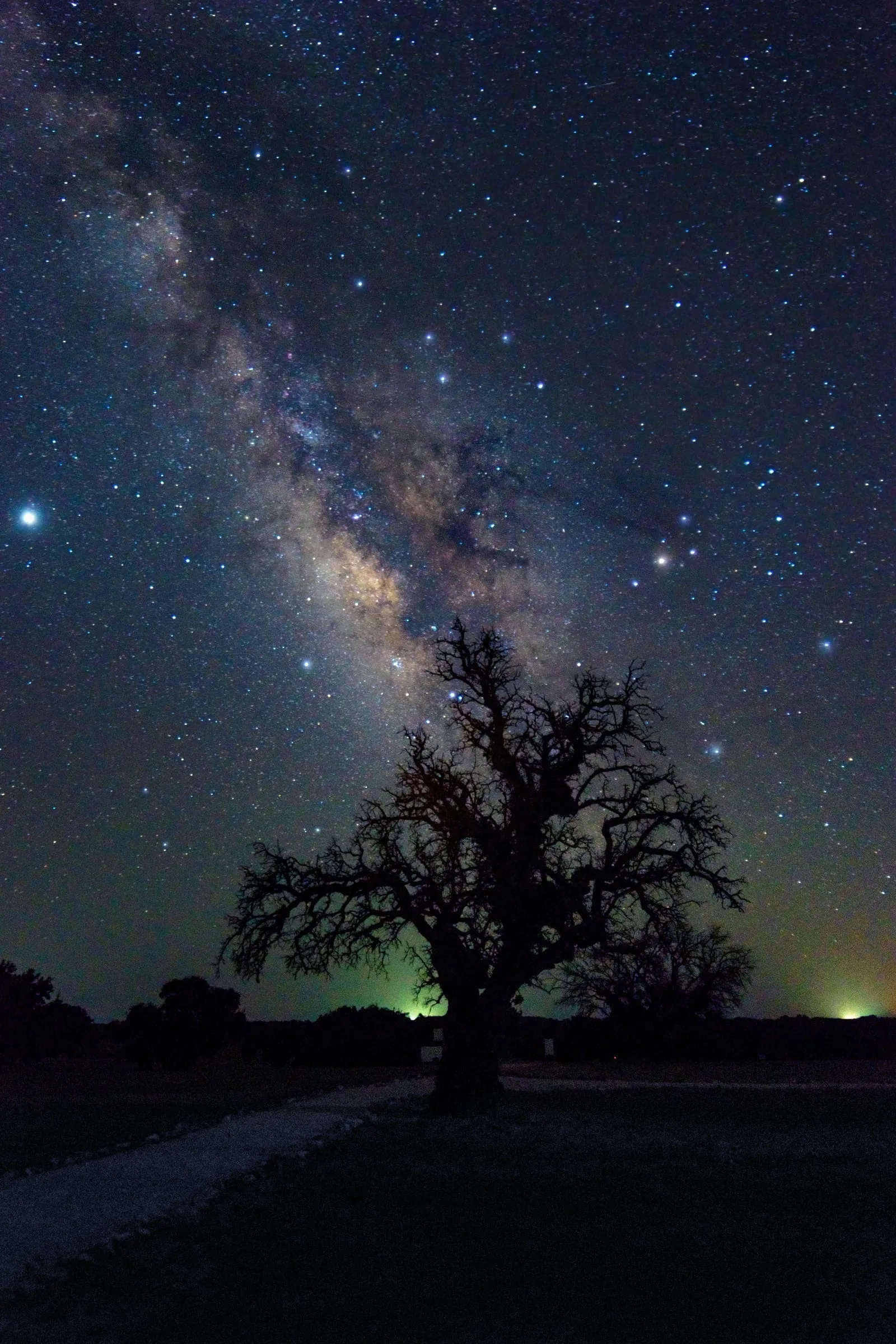
The Texas Hill Country has a dark-sky advantage most people don’t expect. Austin and San Antonio push light pollution outward, but west of Fredericksburg the sky still opens up in a way that makes the Milky Way visible on a clear, moonless night without special equipment. Three Hill Country state parks carry official International Dark Sky Park designation. Several more run organized star parties with telescopes, rangers, and programming that rewards showing up rather than hoping for the best from a random pull-off.
Use this guide if you want to plan a night sky trip that delivers. The difference between a good experience and a wasted drive comes down to four things: which park you choose, when you go, what you bring, and what the moon is doing.
Best Stargazing Spots in the Hill Country
| Spot | Type | Best For | Reservation Need |
|---|---|---|---|
| Enchanted Rock | International Dark Sky Park | First-timers, iconic setting | High on popular dates |
| South Llano River SP | International Dark Sky Park | Campers, quieter experience | Moderate |
| Lost Maples | Canyon-country park with star parties | Western Hill Country trips | Varies with event |
| Devil’s Sinkhole | Special-event viewing | Bat emergence + star party combo | Event-based |
Enchanted Rock: The Headliner
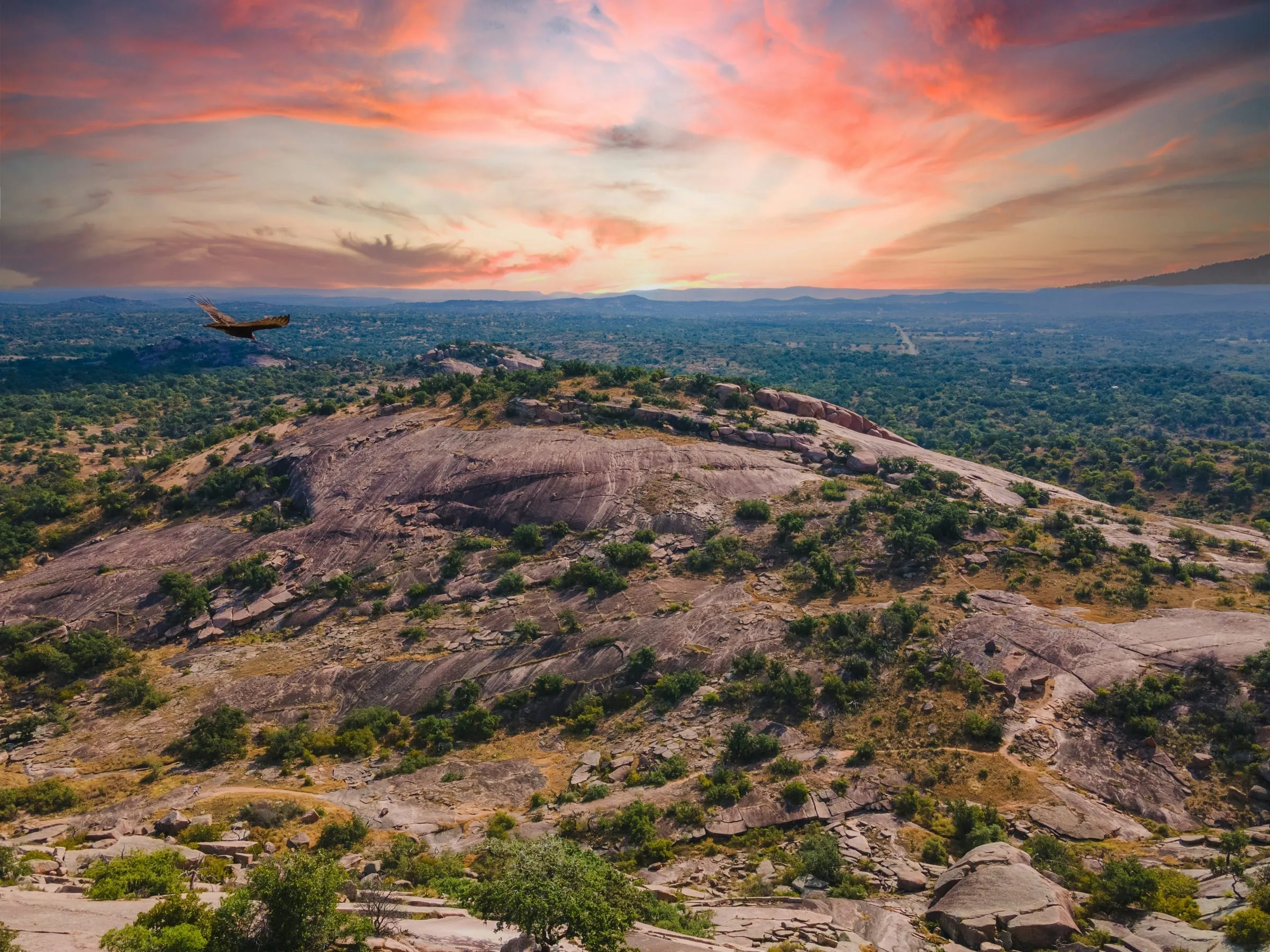
TPWD is explicit about it: Enchanted Rock is an International Dark Sky Park and one of the best public places for stargazing in Central Texas. That designation isn’t just a label. It means the park actively works to limit light pollution on-site, runs organized star parties, and has dark-sky etiquette baked into its visitor guidance.
The dark-skies page at Enchanted Rock has the specific event schedule. For 2026, major star parties are scheduled for April 11th, April 18th, and September 5th. One rule worth understanding: the park is open until 10:00 p.m. for day use, but you must be inside the gate by 8:00 p.m. before it closes to new arrivals.
Camping here puts the night sky directly above the granite dome, an experience that’s hard to replicate at a drive-in stop. Day-use access is competitive on weekends, and the park frequently reaches capacity. Book through the TPWD reservation system before committing to a date.
For deeper planning on the daytime side of an Enchanted Rock visit, the Enchanted Rock complete guide has the hiking and logistics detail. The what to pack for Enchanted Rock guide covers the gear side for the full trip.
South Llano River: The Quieter Alternative
South Llano River State Park near Junction is the second International Dark Sky Park in the Hill Country, less famous than Enchanted Rock. The park runs monthly star parties near the new moon. Check the TPWD event calendar for current 2026 dates. Official guidance for South Llano tells visitors to bring water, snacks, weather-appropriate clothing, and a red-light flashlight. It is a stationary program, not a hike.
Lost Maples: Canyon-Country Dark Sky
Lost Maples State Natural Area is best known for fall color, but its star parties are a major draw. The canyon topography at Lost Maples creates a bowl of dark sky away from ambient light. For 2026, upcoming events include Stories in the Stars (March 19) and the Summer Star Party (June 13).
Pack a chair or blanket (you’ll be reclined for a sustained stretch), water, snacks, bug spray, and a red-light flashlight. The canyon traps insects in summer, so bug spray isn’t optional at warm-season events.
Devil’s Sinkhole: The Niche Pick
Devil’s Sinkhole State Natural Area near Rocksprings pairs two experiences you won’t get anywhere else on this list: watching hundreds of thousands of bats spiral out at dusk followed by a ranger-led stargazing session. Evening bat flights are scheduled Wednesdays through Sundays, May 1 through October 31, 2026.
Access is strictly ranger-led and event-based. Reservations are mandatory for all night events; call 830-683-BATS to book. Tours meet at the Visitors Center in Rocksprings. Check the Community Day at the Devil’s Sinkhole event page for current programming.
Moon, Weather, and When to Go
This is where most trip plans succeed or fail. Choosing the right park matters. Choosing the wrong night cancels everything out.
Moon phase is the single biggest variable. A full moon illuminates the sky enough to wash out the Milky Way entirely. New moon nights (and the five or six days on either side) give the darkest conditions. Most official star parties are scheduled around this logic, which is part of why checking the event calendar is worth the effort.
Cloud cover and humidity are harder to predict more than a few days out. Summer stargazing is possible in the Hill Country, but the air carries more moisture and afternoon storms leave residual cloud cover well into the night. Fall and winter improve the odds significantly. Colder, drier air helps, and the Milky Way’s core arcs high before bedtime in late summer and fall.
Tools worth using: A moon phase calendar (any weather app includes one), Clear Outside or similar astronomy weather apps, and the relevant TPWD park page for event-specific conditions.
Local Club Option: Hill Country Astronomers
If you want something between a solo dark-sky night and a state-park program, Hill Country Astronomers is worth knowing about. The club runs regular meetings and observing activity for people who want more telescope time, more sky context, and a local community to learn from.
For readers based in or near Kerrville, Fredericksburg, Junction, or the western Hill Country, that can be the easiest way to turn stargazing from a one-off outing into a repeat hobby. Check their site before you drive for current meeting details and public-event information.
Camping vs. Drive-In: Choosing Your Trip Shape
The way you experience the night sky depends on whether the dark-sky event is the whole trip or just the evening portion of it.
- Drive-in viewing: Best for first-timers, families testing the idea, and anyone who wants ranger programming or telescope access without committing to an overnight. The tradeoff is that your night is shaped by gate hours, event timing, and the park’s official cutoff.
- Camping-based stargazing: Best for photographers, slow travelers, and anyone who wants to stay past the formal program and let their eyes adapt fully. This is the lane where camp comfort matters, and our Hill Country camping gear guide is the natural companion.
If the night drive is part of the appeal rather than a chore, our Hill Country scenic drives guide covers the routes that pair best with these darker parks.
What to Bring
Official event guidance from TPWD parks is consistent enough that this list is sourced rather than guessed:
Non-negotiable:
- Red-light headlamp. The single most important item. White light ruins night vision for everyone around you and takes 20 to 30 minutes to recover. Every TPWD star-party page says this.
- Water. South Llano and Lost Maples events both list it explicitly.
- Snacks. Same sourcing; events run for hours.
- Weather-appropriate clothing. Hill country nights can drop significantly after sunset, and some events run into late fall when a fleece is needed.
Strong additions:
- Camp chair or blanket. Lost Maples guidance specifically names this; looking up for two hours from a standing position is less comfortable than it sounds.
- Bug spray. Mandatory at any warm-season event in the canyon parks.
- Binoculars. The Milky Way resolves into individual star fields with a basic pair; you don’t need a telescope to have a substantially better view than the naked eye.
Why Official Parks Beat Improvised Stops
The McDonald Observatory’s dark skies resources are worth spending time with if you want the underlying explanation. Shielded light, lower-intensity fixtures, and turning off unnecessary lighting all compound to preserve sky quality across a region.
That bigger picture makes the case for why official park access beats roadside improvisation. Dark sky parks have been selected for their light environments, their ranger programs add educational context, and the after-dark infrastructure (designated viewing areas, parking, restrooms) removes the variables that make a spontaneous pull-off into a safety problem. The Hill Country has enough good options in official parks that there’s no reason to improvise.